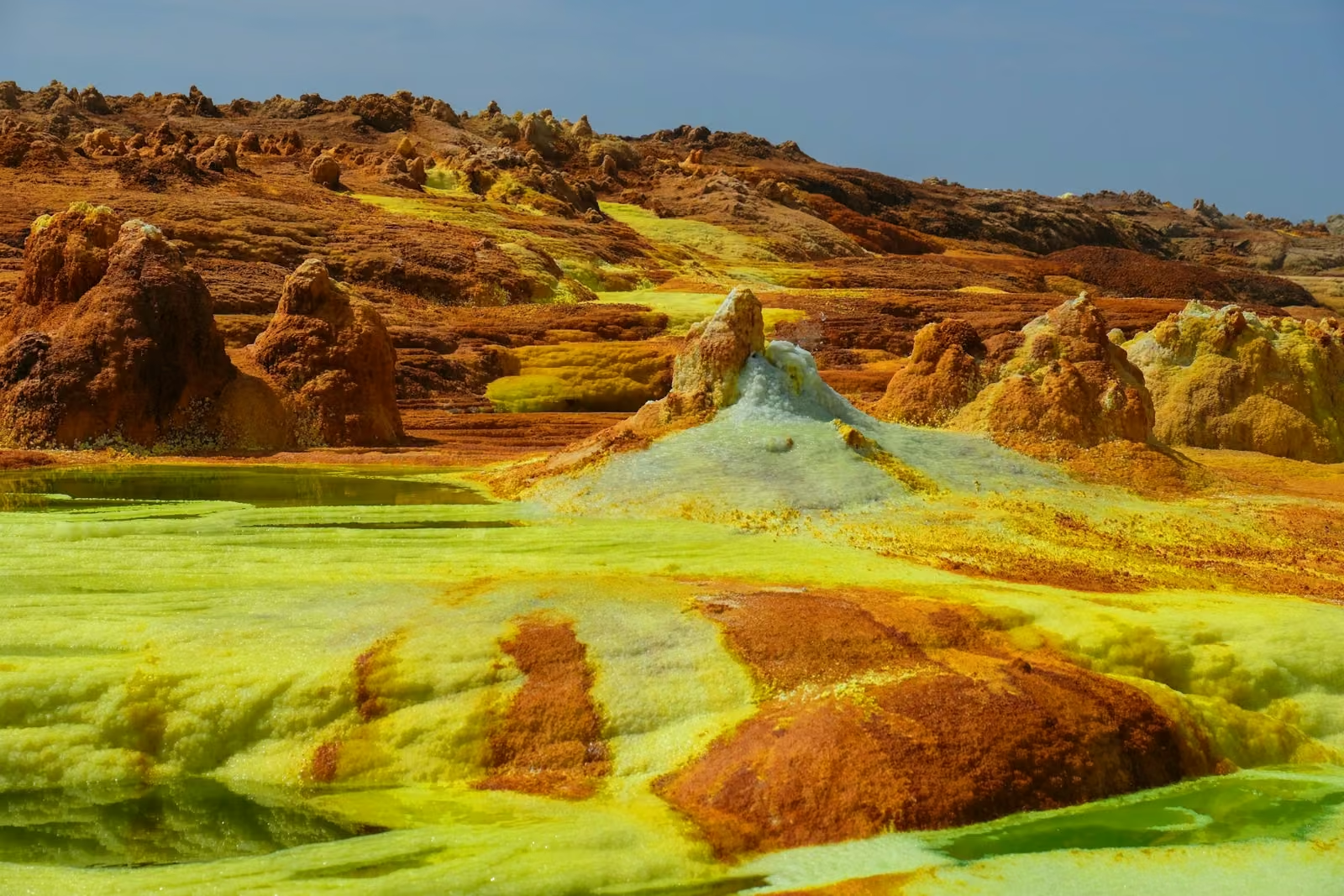
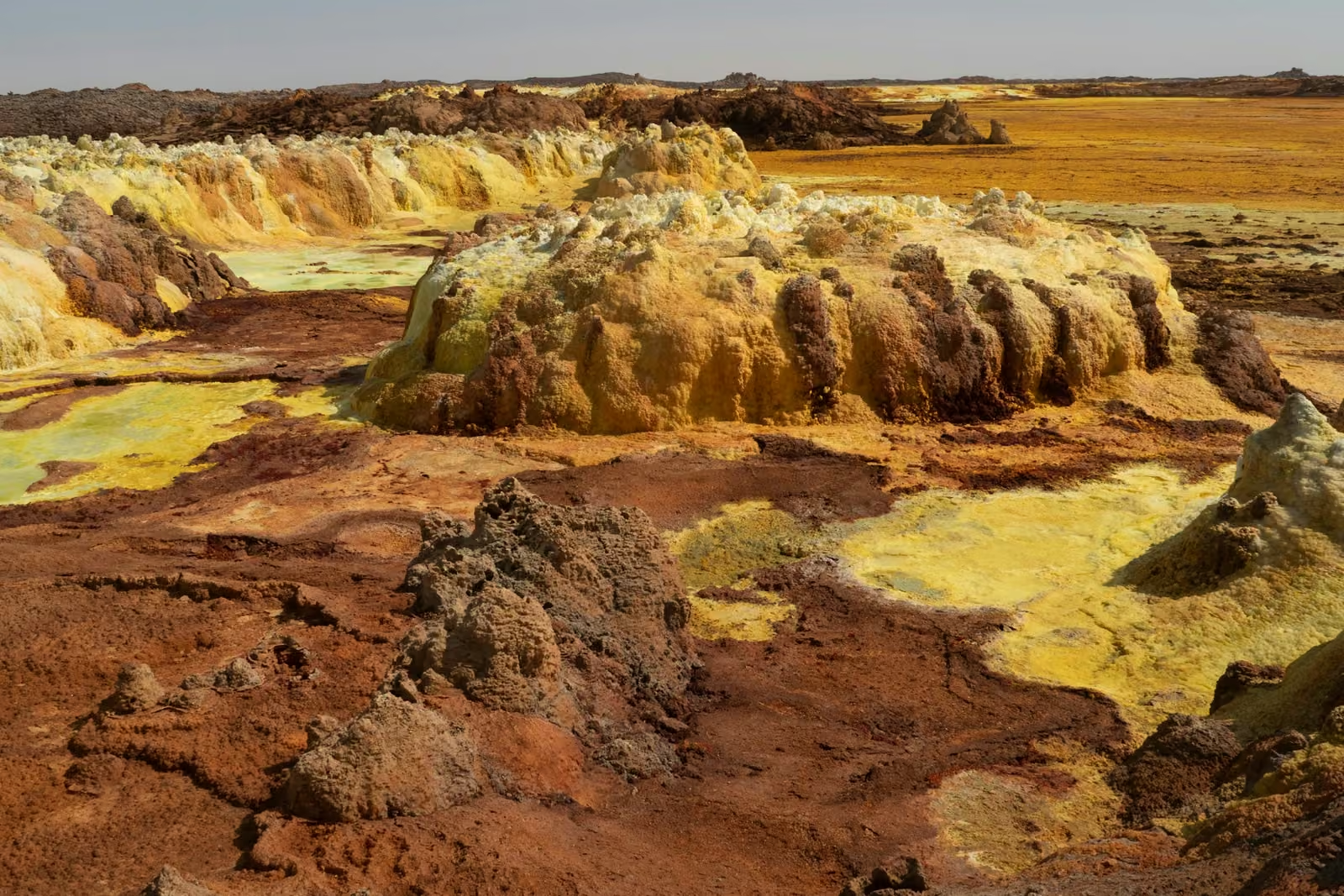
In the Danakil Depression, Ethiopia reveals a landscape of yellow mineral terraces, salt plains and dark volcanic rock. The colours look improbable even in photographs; the scale is harder to capture. This is Afar country, where salt has shaped livelihoods for generations, and where a journey demands far more preparation than a place on a bucket list.
Why does the landscape look like this?
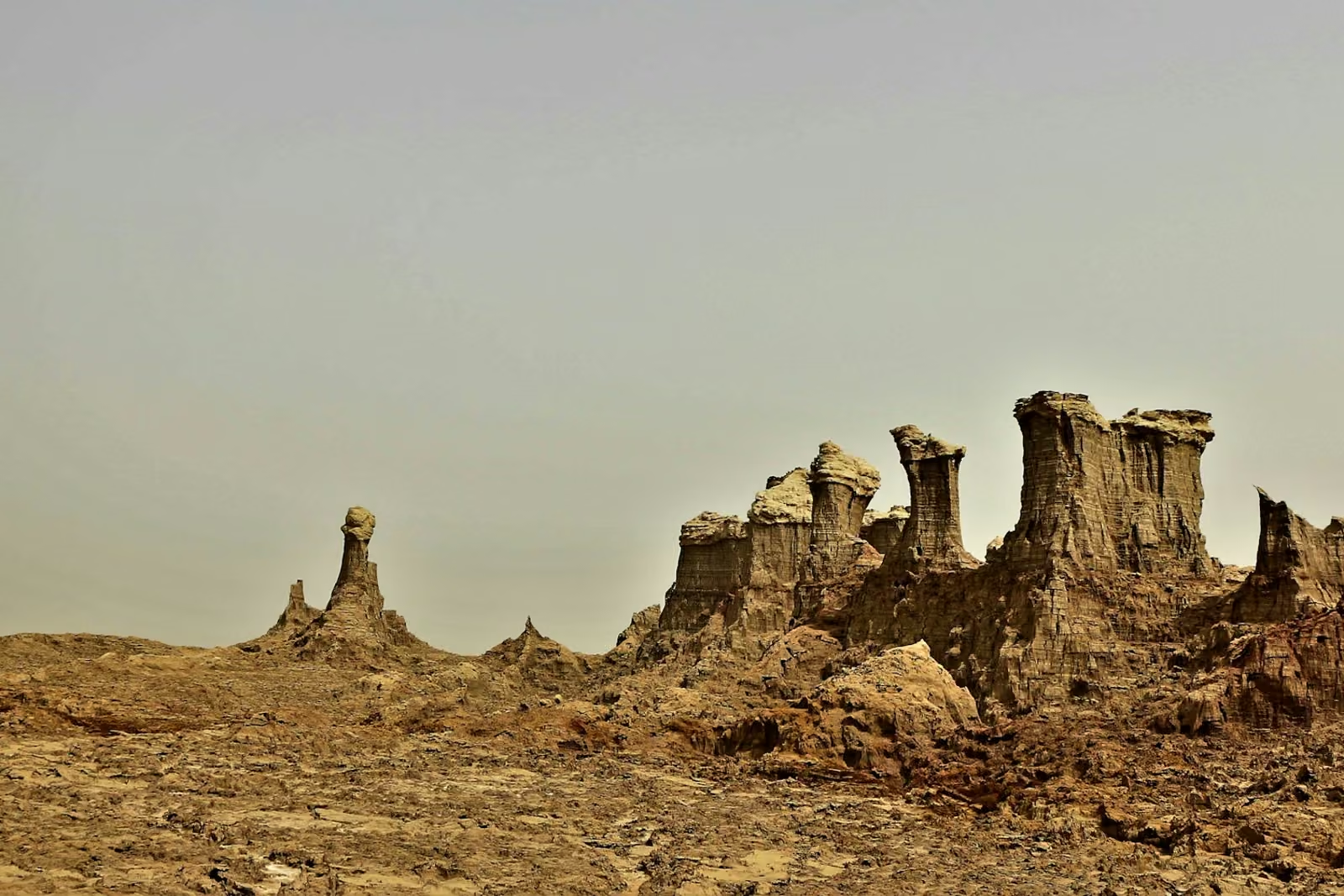
Danakil lies in northeastern Ethiopia’s Afar region, in a low-lying area where tectonic plates are moving apart. Heat, volcanism and salt have created an extraordinary range of textures: cracked white surfaces, black lava and mineral deposits in startling colours.
NASA’s explanation of the depression gives useful context for what you are looking at. Much of the fascination comes from these contrasts within one region. A bright hydrothermal field and a vast, quiet salt plain can feel like completely different worlds.
Dallol: vivid colours and delicate ground
Dallol is the place behind many of Danakil’s most striking images. Mineral terraces, small pools and salt formations create patterns of yellow, green, rust and white. Look closely and the scene becomes less about one sweeping view than dozens of tiny shapes.
These are hydrothermal features, not bathing pools. Acidic water, hot ground, fragile crusts and gas emissions make wandering away from the local guide dangerous. Stay on the approved route, leave formations untouched and accept that conditions may prevent a visit. The photographs are a record of a changing landscape, not a promise of the exact colours you will find.
Lake Karum and the salt country
Lake Karum, also called Lake Assale or Asale, offers a different kind of drama. Here the horizon stretches across pale salt country, and shallow water can produce reflections when conditions are right. Late light is especially rewarding for photographs, but the surface and water coverage vary.
The salt trade is part of Afar life, not simply a backdrop for visitors. If workers or caravans are present, ask before taking photographs and let your guide explain any local expectations. Do not assume that a particular activity will happen on your schedule.
Give the quieter details some attention too: the change in colour across the plain, the shape of cut salt, the distance between settlements. They help make sense of a place that can otherwise be reduced to a few spectacular images.
Erta Ale: a volcano with no guaranteed show
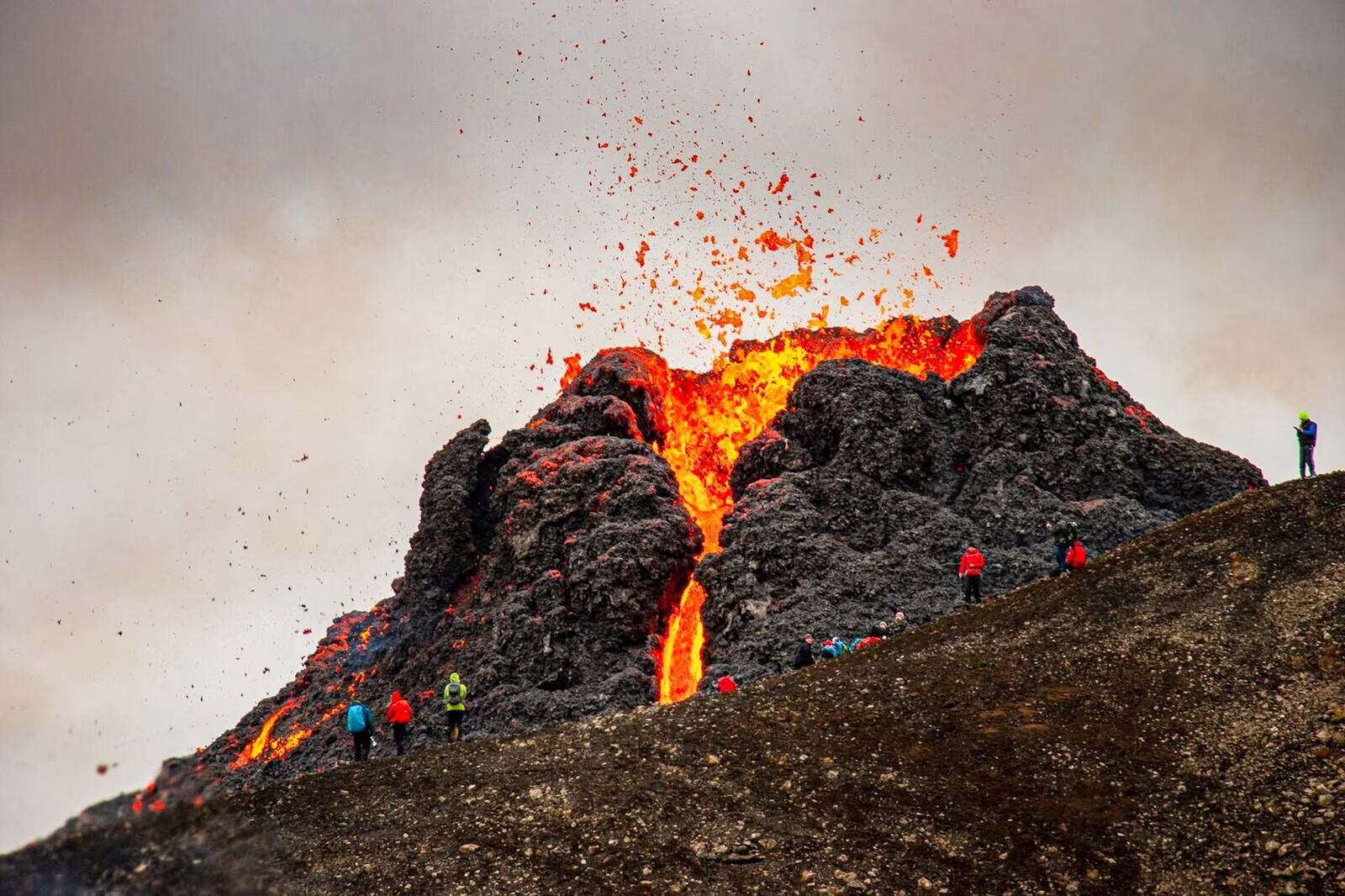
Erta Ale adds black lava terrain and the possibility of seeing volcanic activity. Tours have often scheduled walks in the evening or early morning, but access, walking distances and viewing points change. Ask for a recent description of the actual route rather than relying on an old account of the hike.
The Smithsonian’s Global Volcanism Program documents changes at the volcano. A visible lava lake is never guaranteed, and photographs from previous years can give misleading expectations. Heat, gases, unstable ground and volcanic activity may require turning back; a responsible guide needs the freedom to do so.
What a tour usually involves
A Danakil Depression tour commonly spans three days and two nights, combining long 4WD journeys with short visits and, where possible, a volcano walk. Semera and Mekelle appear frequently in itineraries, but the current restrictions mean neither should be treated as a confirmed gateway.
When travel becomes appropriate, compare the complete route and departure arrangements. Ask about daily driving time, vehicle occupancy, local Afar guides, permits, required escorts, communications and evacuation plans. Choose a team for its judgement and logistics as well as its price.
A useful budget reference: one operator, Great Ethiopian Tours, advertises a three-day small-group itinerary at US$450 per person. This is an advertised example checked in November 2026, not confirmation that it can currently operate. Obtain a fresh quote and check flights, hotels, meals, water, equipment, fees and cancellation terms separately.
Heat, camping and packing
November to February is generally the more comfortable seasonal window, but “cooler” is relative here. Plan around early starts and rest periods rather than trying to fill every hour with sightseeing.
Expect basic expedition accommodation rather than hotel comforts: some itineraries use open-air camping or simple shelters, with limited washing facilities, privacy and charging. Confirm the precise camp setup before paying. A night at a hotel before and after the expedition can give you time to prepare and recover.
- For the sun: loose, covering clothes, a hat, sunglasses and sunscreen.
- For uneven ground: sturdy closed shoes and a headtorch with spare power.
- For camp: a sleeping liner, toiletries, personal medication and a power bank.
- For remote travel: confirm the operator’s drinking-water provision and backup supplies.
Leave room for the people behind the scenery
Employ local guides, ask permission before photographing people and carry your rubbish out. A good journey should leave you knowing something about Afar life as well as its geology.
For another side of the country, our guide to Ethiopian cuisine explores injera, coffee and shared meals. Keep Danakil on your future list, revisit the travel advice when conditions change, and save the places that interest you to your Skratch map.
Can you visit Danakil right now?
Travel update: 4 November 2026. The UK’s FCDO regional advice advises against all travel to parts of Afar near Eritrea and Tigray, and against all but essential travel to the rest of Afar. Foreign nationals cannot currently use airports in Afar and that civilian flights to and from Tigray are suspended.
That makes Danakil a destination to research for the future, rather than book as a routine holiday now. Check your own government’s advice, official restrictions and insurance terms before committing; an advertised departure does not establish that a route is accessible or advisable.