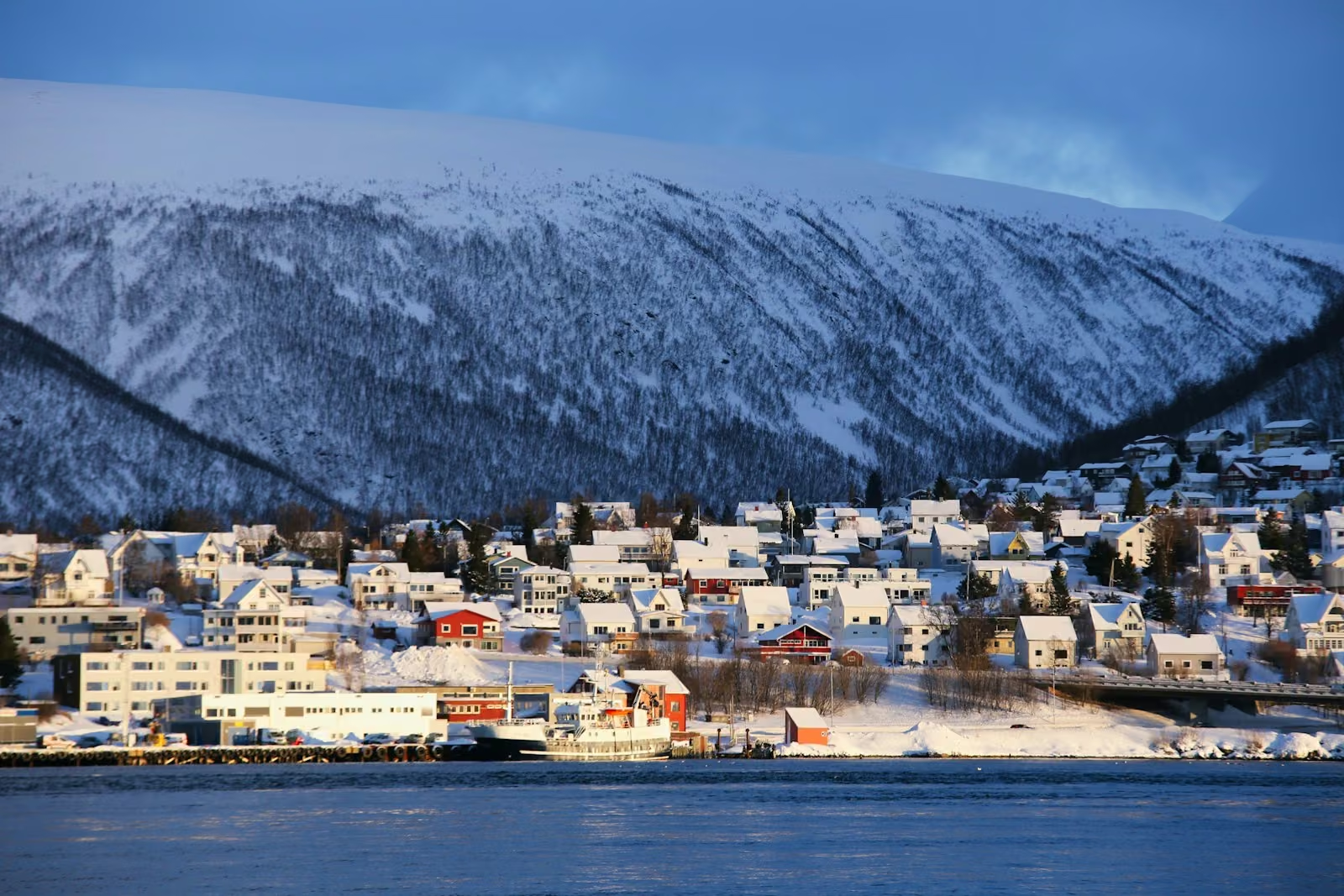
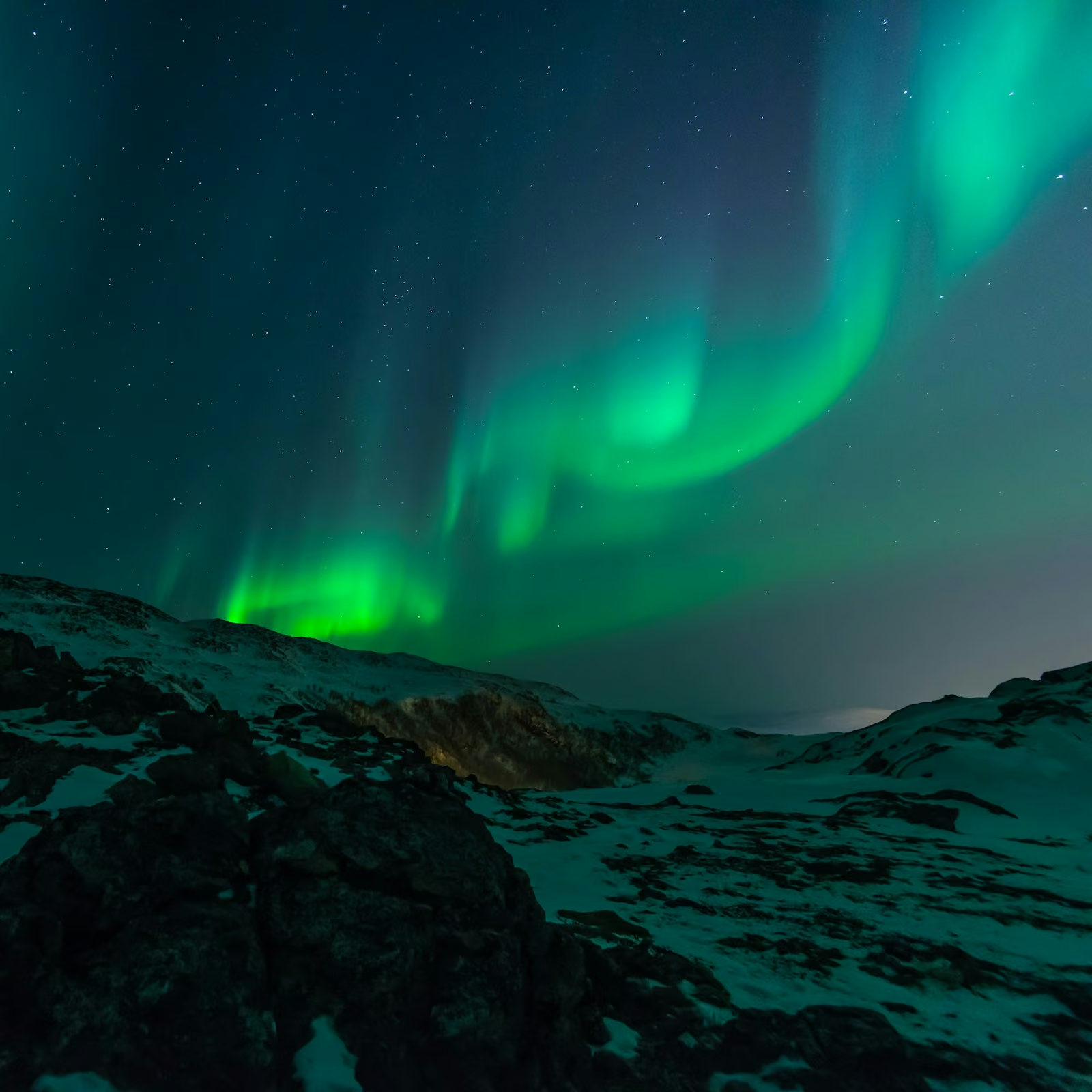
Visit Tromsø, Norway, in winter and the hours can feel slightly out of order. You might wander past the harbour under a blue midday sky, stop for cinnamon buns while the streetlights are still on, then head out after dinner to look for northern lights. Above the Arctic Circle, Tromsø combines snowy mountains and fjords with a lively little city: somewhere you can have an adventure without spending every evening in a remote cabin.
When to visit Tromsø in winter
Winter here changes character as the light returns. December is about twilight, festive windows and long evenings. February and March offer a better balance of daylight sightseeing and dark nights, especially if getting outdoors matters as much as seeing the aurora.
Tromsø in December: blue light and Christmas atmosphere
December in Tromsø is shaped by polar night. The sun stays below the horizon from roughly late November to mid-January. That does not mean every hour is pitch black: around midday, twilight can turn the snow and sky blue, pink and lavender.
Plan scenic outings around that short window of light, then save museums, cafés and northern lights tours for later. Christmas adds a cosy feel, but do check restaurant and activity opening dates over the holidays rather than assuming everything runs as usual.
Tromsø in January: the gradual return of the sun
Visit Tromsø in January and you can catch the city slowly emerging from polar night. The sun rises above the horizon around mid-month, although surrounding mountains delay when it becomes visible from parts of town. Early January still feels deeply wintry; later in the month, the growing light starts to change your sightseeing options.
Allow four or five nights if you can. That gives you several opportunities to look for the aurora and some breathing room if weather changes your plans. Visit Tromsø’s official winter guide is useful for checking seasonal activities before booking.
What to see in Tromsø: start with the city
There is a temptation to book an excursion for every day. Leave yourself some time in Tromsø itself. The centre is compact enough for slow wandering, with colourful wooden buildings, a waterfront and plenty of places to thaw out over coffee.
See the city from Fjellheisen
The cable car is an easy way to understand the geography: the city spread across its island, the bridge reaching towards the mainland, and mountains beyond the water. Go around the brightest part of the day for the landscape, or after dark for the city lights. If the weather closes in, swap it for another day.
Check Fjellheisen’s official visitor updates before travelling; construction and operating conditions can affect access. Take the cable car rather than treating the mountain paths as a casual winter walk.
Make time for the Arctic Cathedral and Polar Museum
Across the bridge, the Arctic Cathedral’s sharp white silhouette is one of Tromsø’s most recognisable landmarks. Back in the centre, the Polar Museum adds context to the landscape outside, exploring Arctic expeditions and the region’s history of trapping and overwintering. Check opening hours before setting out, especially around Christmas.
Between sights, follow your appetite. A bowl of fish soup, a bakery stop and a warm window seat can be as much a part of the trip as the headline attractions.
Allow around 1–2 hours for Fjellheisen, including time for the view and a warm drink, plus travel from town. The adult return ticket is currently NOK 645; check the official booking page for your dates.
Seeing the northern lights in Tromsø
The northern lights are the obvious reason to come, but they are also the one part of your itinerary you cannot reserve. Darkness, clear skies and auroral activity all need to line up. A snowy afternoon does not necessarily tell you what the sky will do that evening.
A guided chase is a practical choice for a first visit: local guides can respond to cloud cover and take you beyond the city’s lights. Compare tour lengths, group sizes, clothing provision and cancellation terms. Some outings involve long drives and late returns, so avoid booking your most energetic activity first thing the next morning.
Budget roughly NOK 1,300–2,400 per person for a shared northern lights chase. Bus tours tend to cost less than small-group outings. Many run for 5–8 hours, so this is a full evening rather than a quick stop. Check whether warm clothing, food and photos are included.
Book your first aurora outing early in the trip. You will have more flexibility to try again if the weather does not cooperate.
You may see the lights from town, but darker surroundings generally make viewing easier. Keep expectations realistic: faint displays can look less colourful to your eyes than they do in long-exposure photographs. For a wider look at where and when to go, read our guide to seeing the northern lights.
Winter adventures beyond the city
Once you have explored the city, choose one or two outings that appeal to you. Dog sledding, a Sámi-hosted reindeer experience or a fjord excursion all offer different ways to spend a day. Leave time between tours to enjoy being here.
Dog sledding and Sámi-hosted experiences
Dog sledding brings you into the snowy countryside, often with a stop to warm up afterwards. Check whether you will drive a sled or ride as a passenger, how physically demanding it is, and whether transfers and winter clothing are included. Snow conditions affect availability.
A Sámi-hosted visit offers a chance to hear about reindeer herding and Sámi life from the people who practise it. Choose an experience led by Sámi hosts, and give the storytelling as much attention as the animals. It is a chance to understand the region through its people, as well as its landscapes.
For planning, dog sledding commonly costs around NOK 2,200–3,400 per person for shared trips lasting roughly 4–6 hours including transfers. The sled ride itself may be only 45–60 minutes. A reindeer-feeding and Sámi culture visit is often around 4–4.5 hours; one current morning experience starts at NOK 1,695 per adult.
Fjords and whale watching
A fjord excursion is worth considering even without wildlife: snowy slopes dropping into dark water make the journey itself memorable. Whale watching is more seasonal, usually running from November into January, sometimes longer depending on where the whales and herring are.
Departures sold from Tromsø may involve substantial travel towards feeding areas near Skjervøy. Check the actual route and total duration, rather than just the departure point. Allow a full day and choose an operator that explains its wildlife-viewing practices. Sightings are never guaranteed.
Easy winter walks and quieter moments
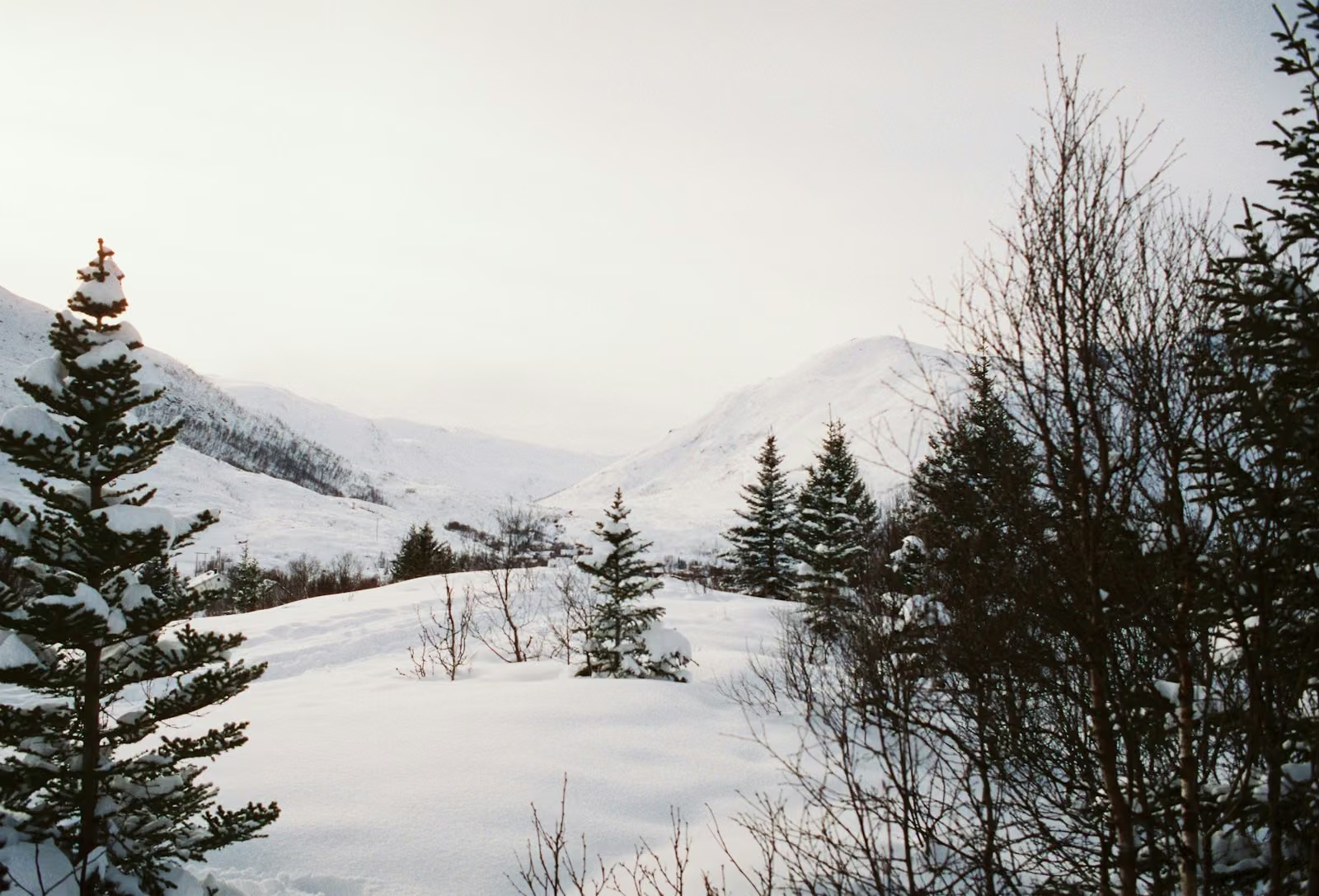
You do not need a mountain summit to enjoy the snow. Prestvannet, a lake and nature reserve on Tromsøya, is a good option for a gentler walk close to the city. Telegrafbukta offers a different scene, with shoreline views and open skies.
Paths can still be icy: wear winter boots and carry traction spikes. Follow maintained routes, respect ski tracks and stay off frozen water unless local authorities explicitly confirm it is safe. Visit Tromsø’s winter walking guidance explains why summer hiking routes should not be treated as winter strolls.
If your dream is a forest cabin holiday, be clear about what Tromsø offers. It is a coastal city surrounded by dramatic scenery, with easy access to tours and restaurants. For inspiration beyond this city break, our guide to winter in Lapland explores more of the region’s snowy experiences.
Where to stay and how to get around
For a first visit, the city centre is a convenient base. You can walk to restaurants, reach common tour meeting points easily and return from a late aurora chase without organising another journey. An apartment with a kitchen can help balance the cost of eating out.
A cabin outside town brings quieter surroundings, but check transport carefully: distance from the airport, winter road access, nearby food options and whether tours collect from the property. Those details matter more when the weather turns.
Airport buses, local buses and taxis mean a rental car is optional for a city-based trip. Use current timetables when planning transfers. If you do rent, be comfortable driving on snow and ice, and leave time for weather delays.
Accommodation prices vary sharply by date. As a starting reference, Thon’s central hotels currently advertise rooms from around NOK 1,400 per night. These are headline starting rates, not guaranteed winter prices: check your actual dates before committing to flights, particularly over Christmas. Compare breakfast inclusion and cancellation terms as well as the room price.
What is the winter weather like?
Expect snow, icy pavements and changing coastal weather, with milder spells that can bring rain or slush. Wind and long periods standing still can make an aurora outing feel much colder than a walk around town. Inland tour stops may also be colder than the city, so dress for the excursion rather than the forecast outside your hotel.
A relaxed four-day outline
- Day 1: Settle in, explore the waterfront and head out on your first northern lights chase.
- Day 2: Keep the morning slow, then visit the Polar Museum and Arctic Cathedral.
- Day 3: Choose dog sledding, a Sámi-hosted visit or a full-day fjord outing.
- Day 4: Take a gentle winter walk and visit Fjellheisen if skies are clear. Leave the evening open for another aurora attempt.
Swap days around the weather and your flight times. All prices above are indicative adult rates checked in October 2026; dates, group sizes and inclusions can change the total.
What to pack and book ahead
Bring thermal layers, a fleece or wool mid-layer, a windproof outer layer, insulated waterproof boots, a hat and warm gloves. Waiting outside for the aurora feels much colder than walking around town. Ask each tour operator what clothing it provides.
Accommodation and popular winter excursions are worth arranging ahead. Pick your priorities, then leave a flexible half-day for clear-weather views or a slow café morning. Check the forecast each day and avoid stacking late-night tours with early departures.
The best Tromsø trips leave space for small moments: fresh snow along the harbour, the first patch of pink in the sky, or a quiet walk before heading somewhere warm. Add your favourite places to your Skratch map as you go, and let the trip become more than a single northern lights photograph.