Poland has two cities that tend to dominate most travel itineraries: Krakow and Warsaw. Both are worth visiting, but they offer very different experiences. This article breaks down what each city has to offer, who each one suits best, and how to decide between them if you only have time for one.

Krakow
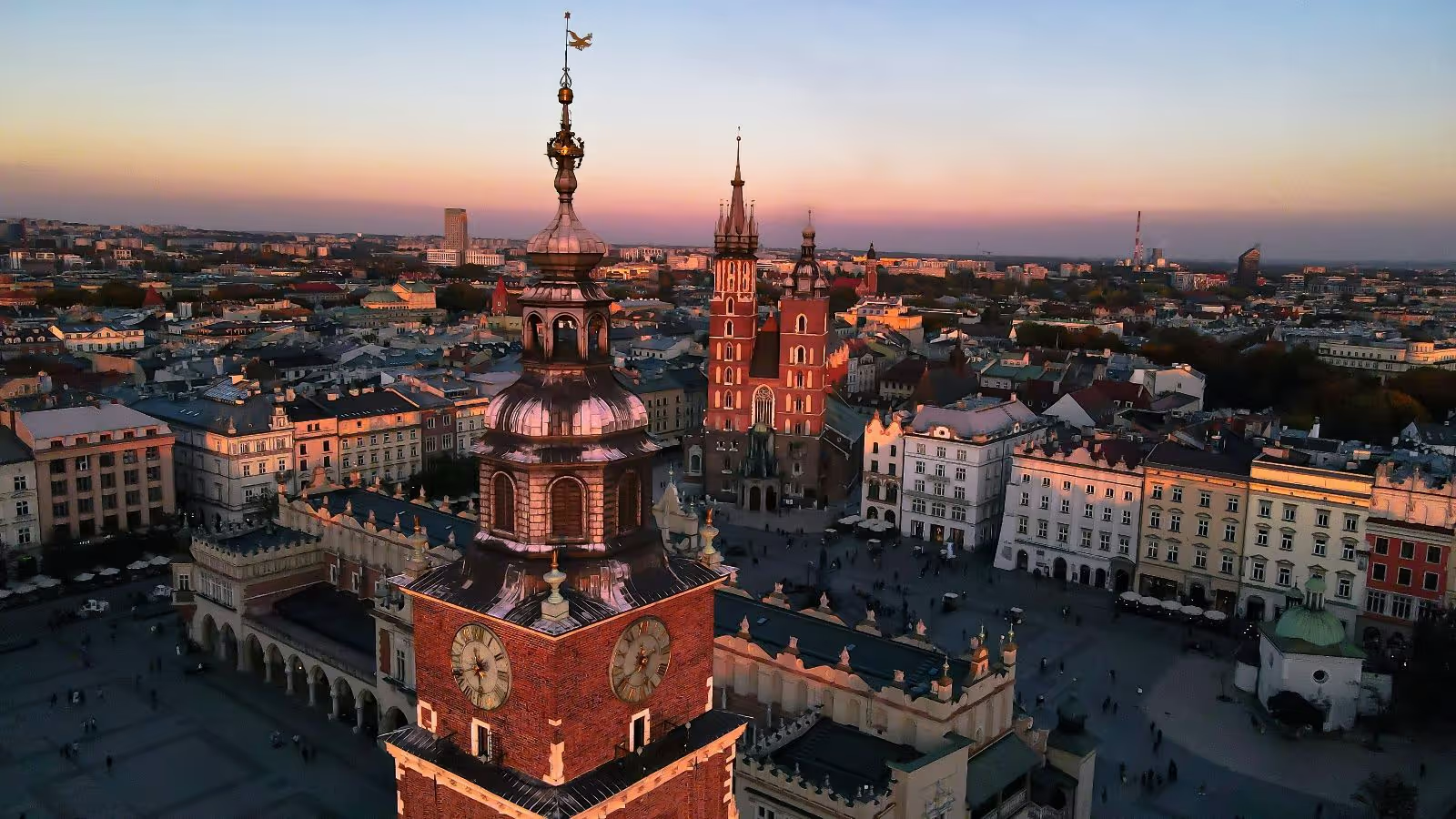
Visiting Krakow feels like stepping into a well-preserved medieval city. It was largely untouched during World War II, which means its Old Town, castle, and historic streets are intact in a way that few European cities can match. It is compact, walkable, and has a distinct atmosphere that draws millions of visitors each year.
Fun Fact: The oldest university in the world, The Jagiellonian University, was founded in 1364 in Krakow!
Places to See in Krakow, Poland
The Old Town, or Stare Miasto, is the obvious starting point. At its centre is the Rynek Glowny, one of the largest medieval market squares in Europe. The Cloth Hall, St. Mary's Basilica, and the surrounding townhouses all sit around this square and are best explored on foot. Wawel Castle and Cathedral, perched on a hill above the Vistula River, is one of the most significant historical sites in Poland and worth spending at least half a day.
The Kazimierz district, historically the Jewish quarter, has become one of the most interesting neighbourhoods in the city. It has a mix of synagogues, independent cafes, street art, and restaurants. Beyond the city itself, the Wieliczka Salt Mine is a short drive away and offers a genuinely impressive underground experience that has been on the UNESCO World Heritage list since 1978.
Auschwitz-Birkenau, the Nazi German concentration and extermination camp, is located about 70 kilometres from Krakow. Many visitors choose to make the trip as part of their time in the region. It is a sobering and important site that requires a guided tour and advance booking, particularly in peak season.

Who Is Krakow Best Suited For?
Krakow works well for those who want history, architecture, and culture in a city that is easy to navigate without much planning. It is well set up for short breaks of two to three days, and the concentration of things to see within a small area makes it accessible for most travellers. It is also a popular destination for food and drink, with a strong restaurant and bar scene that tends to be considerably cheaper than Western European cities. Families, history enthusiasts, and first-time visitors to Poland will find Krakow a natural fit.
Warsaw
Warsaw is Poland's capital and its largest city. It has a very different character to Krakow. The city was almost completely destroyed during World War II and subsequently rebuilt, which means the architecture is a mix of reconstructed historic buildings, Soviet-era blocks, and modern towers. That contrast is part of what makes Warsaw interesting, though it takes a little more time to appreciate than Krakow's more immediately obvious charm.
Things to See in Warsaw, Poland
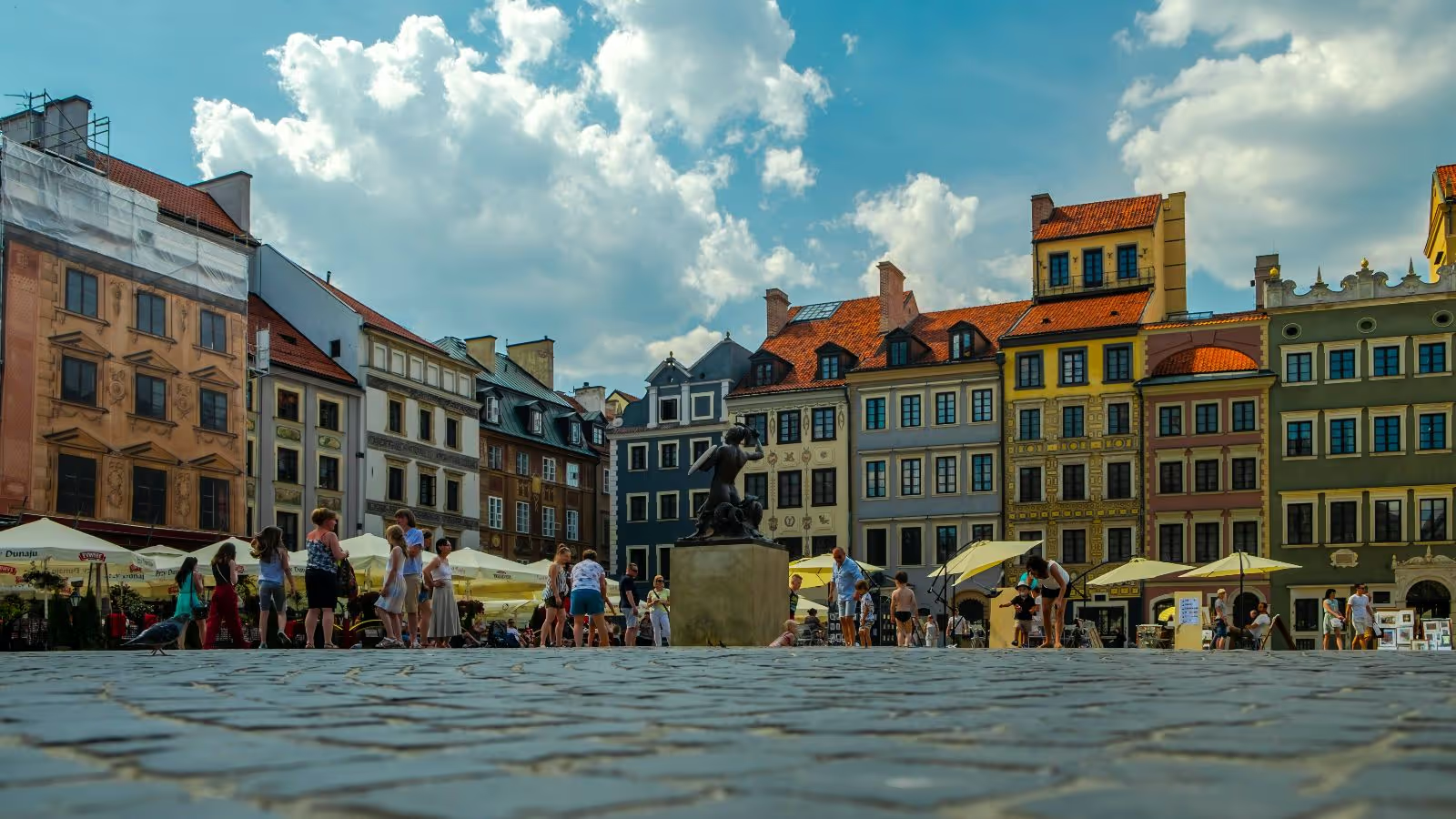
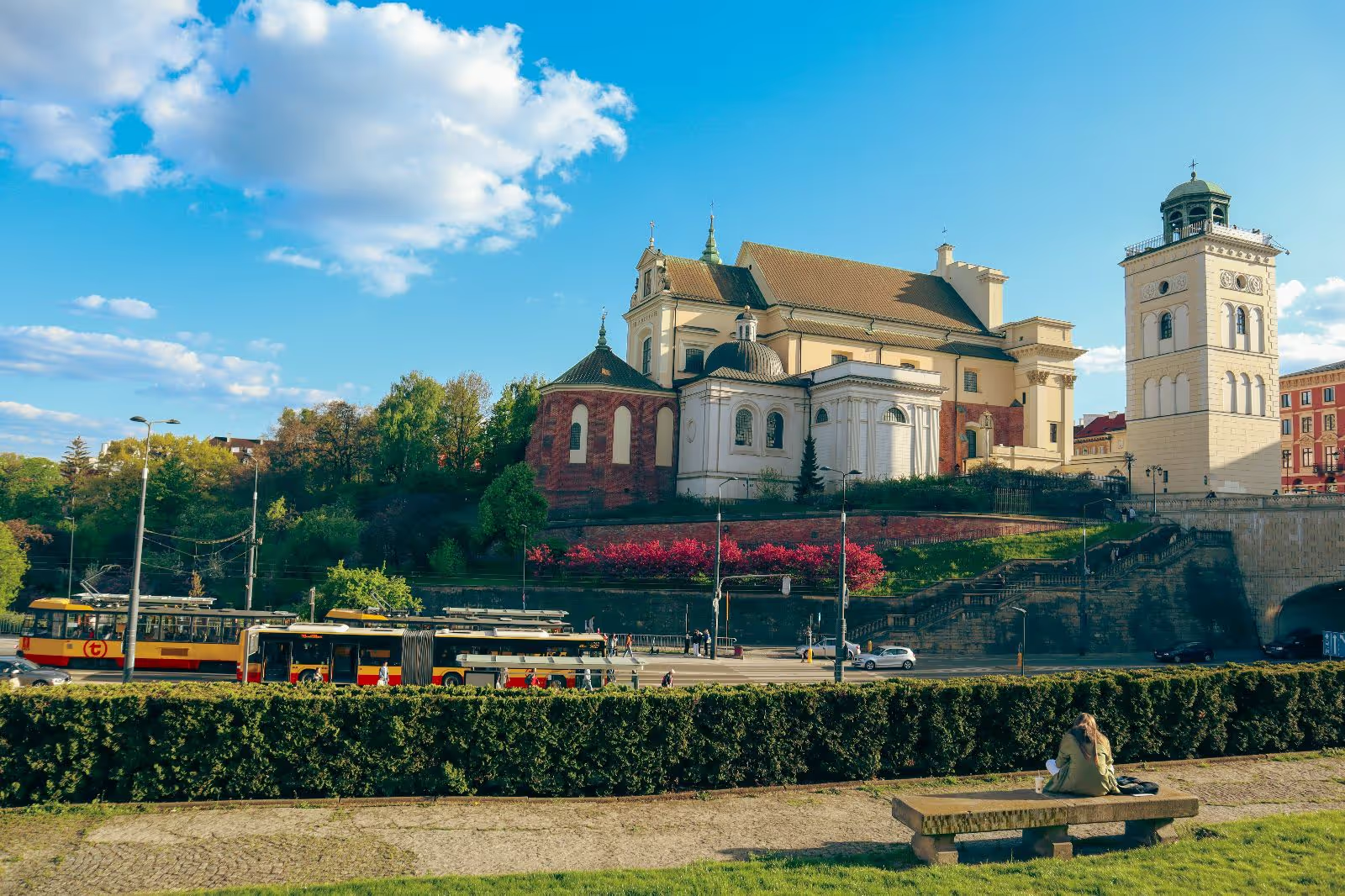
The Old Town was painstakingly reconstructed after the war and is now a UNESCO World Heritage Site, recognised specifically for the effort that went into its restoration. The Royal Castle, Castle Square, and the surrounding streets are worth exploring. Nearby, the Warsaw Uprising Museum is one of the best museums in Poland. It tells the story of the 1944 uprising in detail and is well designed, making it genuinely engaging even for those without a strong background in Polish history.
Among the top attractions in Warsaw is the Palace of Culture and Science, a Soviet-era skyscraper that dominates the skyline and divides opinion among locals. It houses theatres, cinemas, and a viewing terrace, and visiting it gives a clear sense of how the city's post-war history shaped its current layout. Wilanow Palace, on the southern edge of the city, is a Baroque royal residence with well-maintained gardens that offers a quieter alternative to the busier central sights.
The Praga district on the east bank of the Vistula has become one of Warsaw's more interesting areas in recent years. It retained more of its pre-war buildings than the rest of the city and now has a creative and independent scene with galleries, restaurants, and a weekend street market. It is less polished than areas like Srodmiescie but reflects a more local side of the city.
If you're a hitory fan, check out our guide on The Most Iconic Castles to Visit in Europe

Who Is Warsaw Best Suited For?
Warsaw suits travellers who are interested in 20th century history, particularly World War II and the communist period, as well as those who want to see a major European capital that is still in the process of defining itself. It has a strong arts and food scene, a younger demographic compared to other capital cities, and a growing reputation as a business and tech hub. It tends to appeal more to independent travellers and those spending longer in Poland rather than those on short city breaks, simply because it takes more time to get a feel for the city.
Krakow vs Warsaw: How Do They Compare?
When it comes to Krakow vs Warsaw, the choice largely comes down to what kind of trip you are planning. Krakow is more immediately rewarding for a short visit. Its historic centre is compact, the sights are close together, and the city has a well-established tourist infrastructure that makes getting around and finding places to eat and stay straightforward. Warsaw requires a bit more effort to explore but rewards those who put in the time.
In terms of cost, both cities are affordable by Western European standards, but Krakow is generally slightly cheaper, particularly for accommodation and dining in the centre. Warsaw has a wider range of higher-end options across restaurants, hotels, and entertainment.
For history, both cities deliver but in different ways. Krakow's history is visible in its surviving medieval architecture. Warsaw's history is told through what was lost and rebuilt, and through its museums, which are among the best in Central Europe.

Visiting Both Cities
If your schedule allows, combining both cities in a single trip is very easy to do. The two cities are around 300 kilometres apart and well connected by several modes of transport, making it straightforward to add one to the other without much logistical effort.
The train is the most practical option for most travellers. PKP Intercity operates frequent services between Krakow Glowny and Warszawa Centralna, with departures roughly every hour throughout the day. Bus is the cheapest option and services run throughout the day.
FlixBus is the main operator on this route, with departures from Krakow's MDA Bus Station to Warsaw West Bus Station. The journey takes around 3 hours 40 minutes, though this can be longer depending on traffic.
LOT Polish Airlines operates several direct flights a day between Krakow John Paul II Airport and Warsaw Chopin Airport. The flight itself takes around 55 minutes, but when you factor in travel to and from both airports, check-in, and security, the total journey time is typically 3.5 to 4 hours